The Michelin Guide: How Tires Built the World’s Most Powerful Restaurant Rating System
A tire company's marketing pamphlet became the most powerful force in fine dining. More than a century later, the restaurant industry is still reckoning with what that means.
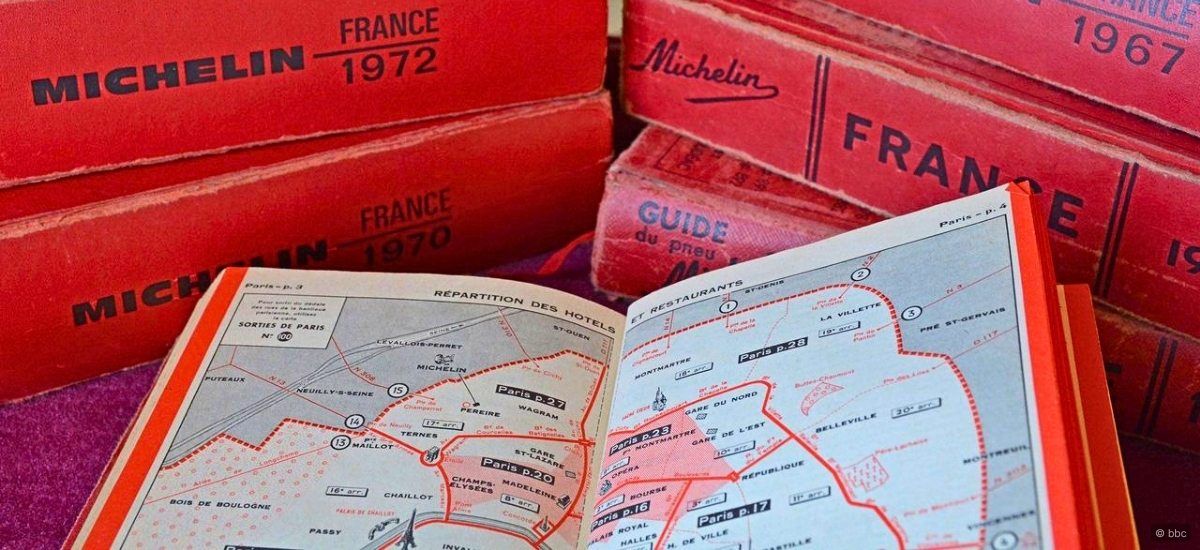
The most influential publication in the history of restaurants was not written by a food critic, a chef, or anyone with a particular interest in cuisine. It was written by two brothers who sold tires. In 1900, Andre and Edouard Michelin published a small red guidebook from their factory in Clermont-Ferrand, France, at a time when fewer than 3,000 automobiles existed in the entire country. The guide offered maps, instructions for changing a tire, locations of fuel stations, and a modest list of places where a motorist might stop to eat or sleep. The logic was elegantly self-serving: if people could be persuaded to drive farther, their tires would wear out faster, and sales would follow.
That pamphlet, distributed free for its first two decades, would evolve into the Michelin Guide, a publication that now covers more than 30,000 restaurants across three continents. The journey from roadside convenience to global culinary authority is one of the stranger origin stories in modern culture, and understanding how it happened reveals something important about recognition, ambition, and the enormous pressure that comes with being measured by a standard you did not choose.
The Michelin Guide was created by brothers André and Édouard Michelin to promote automobile travel. It was originally free and included maps, gas stations, mechanics, and hotels.
From Tire Tracks to Three Stars
The early Michelin Guide was a practical document, assembled from intelligence gathered by the company's traveling tire salesmen who spent their lives on French roads and could report reliably on local establishments. For years, the guide functioned as a travel companion rather than a dining authority. That began to change in the 1920s, when Andre Michelin reportedly saw a copy being used to prop up a workbench in a garage and decided the publication needed to become something people valued enough to pay for. Advertising was dropped, a cover price was introduced, and the content shifted toward more rigorous evaluation of restaurants.
The star system arrived in 1926 as a simplified way to flag restaurants of note. By 1931, it had expanded into the three-tier framework that remains in use today: one star for a very good restaurant, two stars for excellent cooking worth a detour, and three stars for exceptional cuisine worth a special journey. The brothers began hiring anonymous inspectors, undercover diners who evaluated restaurants with a consistency that gave the ratings their credibility. That anonymity became central to the guide's mystique. Chefs could never know when they were being watched, which meant the standard had to be maintained at every service, not just the ones that mattered on paper.
What a Star Actually Does to a Restaurant
The practical impact of a Michelin star on a restaurant's fortunes is both immediate and profound. The legendary chef Joel Robuchon, who held more Michelin stars than anyone in history, observed that a single star increases business by approximately 20%, two stars generate roughly 40% more, and three stars can transform a restaurant into a global destination. For independent restaurants operating on thin margins, that recognition can mean the difference between survival and closure. One chef in California reported that his dining room went from inconsistent bookings to fully reserved overnight after receiving a single star.
But the economics of Michelin recognition cut in both directions. Maintaining the standard requires sustained investment in ingredients, talent, and obsessive attention to detail that imposes enormous strain on the people doing the work. The guide's methodology remains deliberately opaque, with anonymous inspectors using criteria not disclosed in full, which means chefs are often pursuing a target they cannot clearly see. The pressure to perform at peak levels during every service, combined with the fear that a star could be revoked, has created a psychological burden the industry has only recently begun to acknowledge. The guide itself has started notifying chefs in advance when a demotion is coming, a change prompted by growing awareness of the toll these decisions can inflict.
The Weight of the Red Book
The human cost of Michelin's influence became impossible to ignore after the 2003 death of French chef Bernard Loiseau, who reportedly took his own life amid fears of losing one of his three stars. His death forced a public conversation about whether a rating system designed to sell tires had accumulated too much power over the people it judged. In the years since, several prominent chefs have returned their stars. French chef Sebastien Bras asked to be removed from the guide in 2017, citing pressure and the loss of creative freedom. Critics have also raised questions about cultural bias, arguing that the guide's standards remain rooted in French culinary tradition and underrepresent cuisines from Africa, South America, and parts of Asia.
None of this means the guide has lost its power. The announcement of new stars still generates headlines, reservations, and career-defining moments for chefs worldwide. But the conversation has shifted from uncritical reverence to something more nuanced. In American cities without Michelin coverage, the James Beard Awards carry more weight, and a growing number of diners discover restaurants through social media rather than any published guide. The industry is asking whether a system designed to get people to drive farther still serves as the best measure of what a restaurant can be, and whether the cost of pursuing that measure is one the profession should continue to bear without question.
The Takeaway
The Michelin Guide is one of the most remarkable artifacts in hospitality, a publication born from commercial self-interest that evolved into a genuine force for culinary ambition. It elevated cooking from invisible labor to celebrated craft, gave chefs a framework for global recognition, and created a common language for evaluating quality that transcends borders. Those contributions are real and should not be dismissed, even as the guide's limitations become more visible with each passing year.
What the future demands is not abolition but continued evolution. The recent addition of a Green Star for sustainability, the expansion into new markets and cuisines, and the growing sensitivity to the well-being of the chefs it evaluates all suggest an institution aware that relevance requires adaptation. The little red book that began as a scheme to wear out tires faster has become something its founders never intended: a mirror held up to the values of an entire industry. What the restaurant world sees in that mirror, and what it chooses to do about it, will say as much about the future of dining as any star ever could.
Frequently Asked Questions
What is the Michelin Guide?
The Michelin Guide is a restaurant and hotel guidebook published by the Michelin tire company that awards stars to restaurants for exceptional cooking and quality.
Why did Michelin create a restaurant guide?
The guide was originally created in 1900 to encourage people to drive more, which would increase demand for Michelin tires.
What do Michelin stars mean?
One star means a very good restaurant, two stars mean excellent cooking worth a detour, and three stars mean exceptional cuisine worth a special journey.
When did Michelin stars start?
The star rating system began in the 1920s and expanded to the three-star system in 1931.
Do Michelin inspectors pay for their meals?
Yes, inspectors visit anonymously and pay for their meals to ensure unbiased reviews.